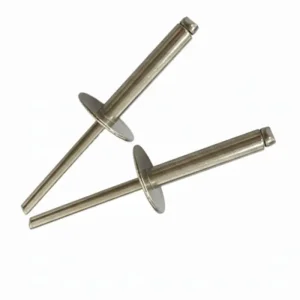
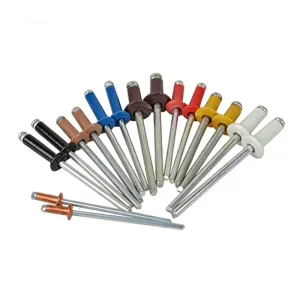
Direct factory wholesale items certified under ISO 9001 and IATF 16949 for automotive, structural, and heavy industrial integration.
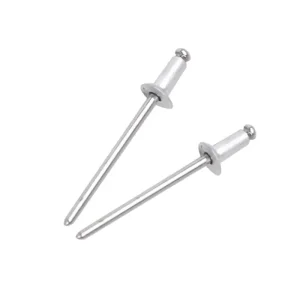
Evaluating structural integrity, heat-affected zone (HAZ) damage, surface coating preservation, and total cost of assembly across OEM production lines.
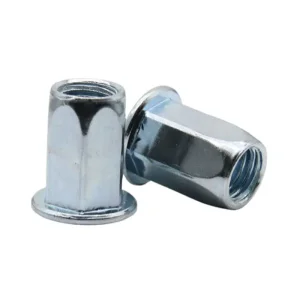
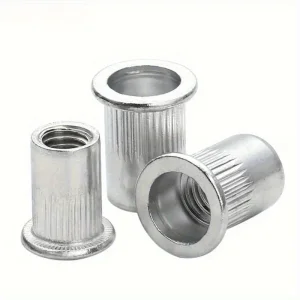
Rivet nuts (also known as blind threaded inserts) provide permanent, load-bearing internal threads in thin-walled substrates where single-sided installation ("blind" access) is required. Installed via a pneumatic or hydraulic pull-up tool, the rivet nut's unthreaded body collapses radially to form a secure bulge against the reverse side of the panel. This mechanical clamping mechanism eliminates the need for thermal energy, preserving pre-painted, galvanized, or anodized surface finishes without structural degradation.
Weld nuts rely on localized electrical resistance or arc welding to melt physical projections on the nut directly into the base sheet metal, fusing the two metals into a singular joint. While yielding exceptionally high ultimate shear and tensile limits on thick steel, weld nuts mandate dual-sided physical access, un-coated raw parent materials, and specialized high-voltage resistance welding equipment. Thermal input alters metallographic grain structures, often destroying protective zinc or powder coating layers.
A rigorous technical comparison across critical operational, physical, and financial manufacturing metrics.
| Evaluation Parameter | Rivet Nuts (Threaded Blind Inserts) | Weld Nuts (Projection / Spot Weld) | Engineering Winner |
|---|---|---|---|
| Access Requirement | Single-sided (100% Blind Access Compatible) | Dual-sided (Must accommodate welding electrodes) | Rivet Nut |
| Thermal Distortion / HAZ | Zero heat input; Base material properties intact | High thermal gradient; Risk of sheet warping & burn-through | Rivet Nut |
| Surface Finish Compatibility | Pre-painted, galvanized, anodized, coated surfaces | Raw/Uncoated metal only (Paint burns off during weld) | Rivet Nut |
| Installation Speed | 2 to 4 seconds per fastener (Pneumatic/Battery Tool) | 5 to 12 seconds (Includes positioning & clamp cycle) | Rivet Nut |
| Substrate Compatibility | Steel, Aluminum, Stainless, Plastics, Composites | Weldable ferrous metals & specific aluminum alloys only | Rivet Nut |
| Ultimate Shear / Tensile Load | High (Optimized by knurled/hexagonal body geometry) | Very High (Direct parent metal fusion) | Weld Nut |
| Tooling & CapEx Investment | Low (Portable ergonomic hand/pneumatic spinners) | High (Robotic welding cells, high-current transformers) | Rivet Nut |
| Rework / Maintenance Cost | Fast spin-out replacement via specialized extraction | Destructive grinding, re-drilling, and spot-welding | Rivet Nut |
WUXI AIPLLE METAL PRODUCTS CO., LTD. – Driving global fastener precision through IATF 16949-certified cold-heading and automated inspection technology.
WUXI AIPLLE is specialized in blind rivets, rivet nuts, and non-standard custom fasteners for many years. Our ISO 9001-compliant quality control eliminates defects, ensures consistent mechanical performance, and protects global distributors and OEMs from costly product returns, allowing you to build customer trust effortlessly.
With our IATF 16949-2016 quality management system tailored for automotive fastener production, we deliver highly stable, standardized, and guaranteed products. Powered by an experienced R&D engineering group, we deliver over 10 annual innovations to solve market demands, enhance assembly working efficiency, and elevate client competitiveness across 50+ countries.
Our modern manufacturing facility houses cutting-edge automation equipment designed to maintain micro-inch tolerances across high-volume production runs:
Polished aluminum, zinc-plated carbon steel, and 304/316 grade stainless steel wire rod stock.
High-speed multi-stage cold forming shaping the flange, body knurling, and internal thread blank.
Automated high-speed assembly combining rivet bodies with high-tensile steel mandrels.
Self-inspection during production adhering to rigorous export standards and structural specs.
Warehouse sorting, automated counting, post-weighing box sealing, and palletization for global export.
How light-weighting trends in EV manufacturing, aerospace structural design, and automated robotics favor rivet nut integration over traditional weld nuts.
As automotive manufacturers transition to aluminum alloys, carbon fiber composites, and multi-material space frames to extend EV battery range, traditional projection welding becomes technically unviable. Weld nuts cause micro-cracking and galvanic corrosion issues when fusing dissimilar metals. Rivet nuts eliminate thermal stress, enabling structural joining across aluminum-to-steel and composite-to-metal joints.
Smart factories are rapidly adopting cobots and multi-axis industrial robots equipped with auto-feed rivet nut tools. Unlike resistance welding, which requires massive electrical infrastructure, water cooling lines, and heavy shielding gear, pneumatic rivet nut feed systems offer compact end-effectors, real-time pull-up torque monitoring, and 99.9% uptime on automated assembly lines.
Modern industrial standards demand 720+ to 1000+ hours of Neutral Salt Spray (NSS) resistance without red rust formation. Welding inherently burns away protective plating at the joint site, creating an immediate corrosion vulnerability. Cold-installed rivet nuts preserve high-performance surface treatments like Zinc-Nickel (Zn-Ni) plating, organic flake coatings, and anodization intact.
Engineered fastening solutions designed for thin metal sheets, plastic, wood, and composite panels where rear-side access is restricted.
Fixing interior body panels, dashboard crossbeams, door hinges, EV battery tray housings, and chassis brackets. Full compliance with IATF 16949 ensures zero failure rates under continuous vehicle vibration profiles.
Mounting internal circuit boards, heavy transformers, fan shrouds, and sheet metal access doors in commercial air conditioning units, server racks, and telecommunication power cabinets.
Attaching aluminum framing components, solar tracker control boxes, roofing sheets, and architectural curtain walls where site-based electric welding equipment is cost-prohibitive or hazardous.
How Wuxi AIPLLE leverages industrial cluster efficiency, vertical integration, and advanced logistics to guarantee supply continuity for global enterprises.
Situated in Wuxi, Jiangsu Province—the heartland of China's precision metallurgy industrial cluster—Wuxi AIPLLE maintains direct strategic partnerships with top-tier steel mills and aluminum refineries. This proximity grants us priority access to high-purity 5052 aluminum wire, 304/316 stainless steel, and high-tensile carbon steel stock. By optimizing raw material throughput and cold-heading machine yields, we pass significant unit cost savings directly to overseas wholesale buyers and OEM factories.
To insulate our international partners against supply chain disruptions, Wuxi AIPLLE operates an intelligent safety stock warehouse storing over 50 million standardized rivet nuts and blind rivets across standard metric (M3-M12) and imperial sizes. Our automated inventory system ensures that standard order lines ship within 48 to 72 hours, while custom non-standard fastener engineering runs progress from CAD tooling design to sample approval in under 15 business days.
Adhering strictly to global automotive, environmental, and mechanical engineering protocols.
Our complete range of open-end, closed-end, hex, knurled, and countersunk rivet nuts is manufactured in exact accordance with DIN 7337, ISO 15977-16584, and ANSI/ASME IFI specifications, ensuring seamless interchangeability with existing global assembly drawings.
All surface coatings—including clear trivalent zinc (Cr3+), yellow zinc, black oxide, and electro-deposited paint finishes—are fully compliant with EU RoHS 3.0 and REACH environmental directives, eliminating heavy metal toxicity risks for global exports.
Every production batch undergoes strict quality gates: tensile shear strength testing, thread push-out torque verification, plating thickness micro-measurement via X-ray fluorescence, and neutral salt spray chamber testing (NSS).
Analyzing direct vs indirect savings when replacing weld nuts with high-strength rivet nut inserts.
While an individual weld nut may appear fractionally cheaper in raw unit cost, its total installed cost is significantly higher. Resistance welding requires certified skilled welders or multi-axis welding robots, high power consumption, dedicated exhaust ventilation, and post-weld slag cleaning. Conversely, a rivet nut can be installed by an entry-level operator in 3 seconds using an ergonomic pneumatic pull tool costing under $300, delivering up to a 60% reduction in total line labor costs.
Welding burns off localized protective coatings, requiring factories to perform secondary rust-proofing, grinding, or re-painting operations post-assembly. Rivet nuts allow manufacturers to utilize pre-painted or pre-galvanized sheet metal coils directly at the stamping phase, skipping the costly secondary paint shop loop entirely and accelerating factory cycle times.
Direct engineering answers to technical queries regarding rivet nut vs weld nut specification and factory sourcing.
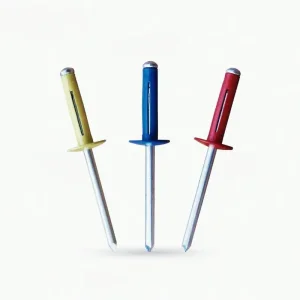
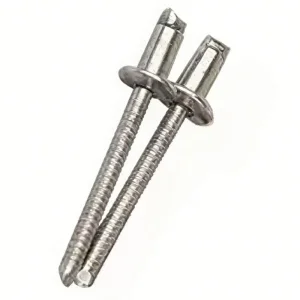
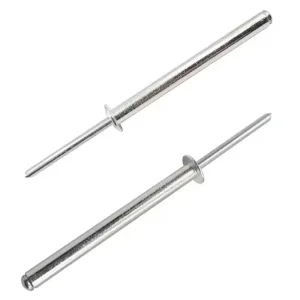
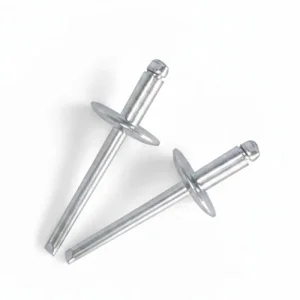
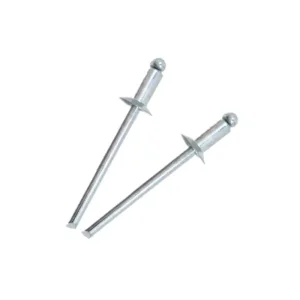
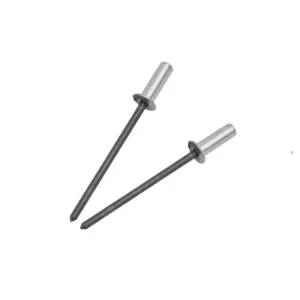
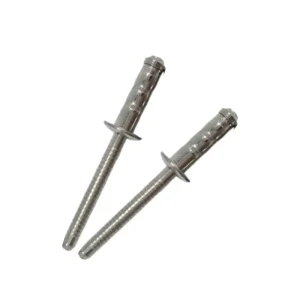
Explore our extended factory line-up of blind rivets, full hex nuts, closed-end waterproof inserts, and structural fasteners.
 AIPLLE METAL